91±¬ÁÏ

Updated
|
How to Appeal Financial Aid Decisions at 91±¬ÁÏs
Learn how to appeal financial aid decisions at boarding schools with expert tips, timelines, and 2026 guidance for families.

How to Appeal Financial Aid Decisions at 91±¬ÁÏs

For many families, financial aid determines whether a boarding school education is possible. When an award letter arrives and the package falls short of expectations, disappointment can quickly set in. However, a financial aid decision is not always final. Schools understand that family circumstances change and that aid calculations may not capture the full picture.

If you are wondering how to appeal financial aid decisions at boarding schools, the process requires preparation, clarity, and professionalism. An appeal is not a complaint. It is a formal request for reconsideration, supported by documentation and respectful communication.

This guide outlines when an appeal makes sense, how to prepare your case, and what to expect in 2026’s increasingly competitive financial aid landscape.

Understanding How 91±¬ÁÏs Award Financial Aid

Most boarding schools use need-based financial aid models. Schools assess family income, assets, debts, number of children in tuition-paying schools, and other factors. Many rely on third-party financial assessment services such as to standardize data collection.

The methodology is similar in concept to college financial aid formulas, although boarding schools maintain greater discretion. As explained by the, independent schools distribute aid based on demonstrated financial need and available institutional funds.

Several key realities shape the process in 2026:

  • Financial aid budgets are finite and often fully allocated by

. . .read more

91±¬ÁÏ Accreditation: What It Means & Why It Matters in 2026

Updated
|
91±¬ÁÏ Accreditation: What It Means & Why It Matters in 2026
Explore the importance of boarding school accreditation in 2026, what it signifies for quality and safety, and what families should know before choosing a school.

91±¬ÁÏ Accreditation: What It Means & Why It Matters in 2026

Choosing the right boarding school is one of the most consequential decisions families and students make. In 2026, amid rapidly changing educational expectations, 91±¬ÁÏ Accreditation: What It Means & Why It Matters in 2026 is more than a label. Accreditation has become a central marker of educational quality, institutional accountability, and long‑term value for students’ academic and personal journeys.

This guide explains what boarding school accreditation is, how it works, why it matters, and what parents and students should consider as they evaluate schools.

What Is 91±¬ÁÏ Accreditation?

Boarding school accreditation is a formal process through which an independent, external organization evaluates a school against defined standards of quality and performance. These standards go well beyond academic content to include institutional health, governance, safety, student support systems, and residential life. Accredited schools voluntarily submit to ongoing review cycles and demonstrate continuous improvement across multiple domains.

At its core, accreditation serves as external quality assurance. Accreditation bodies assess schools through comprehensive self‑studies, site visits by trained reviewers, interviews with stakeholders, and evidence‑based documentation that show how the school meets or exceeds established benchmarks.

Key Focus Areas in Accreditation Standards

Accreditation typically evaluates a boarding school’s:

  • Educational program quality and curriculum alignment

  • Faculty qualifications and professional development

  • Student support services, including counseling

. . .read more

91±¬ÁÏ Mental Wellness After COVID: Best Practices

Updated
|
91±¬ÁÏ Mental Wellness After COVID: Best Practices
How boarding schools are advancing mental wellness post-pandemic through innovation, prevention, and student-centered best practices in 2026.

91±¬ÁÏ Mental Wellness Post-Pandemic: Innovations & Best Practices

The conversation around student well-being has permanently shifted. In 2026, 91±¬ÁÏ Mental Wellness Post-Pandemic: Innovations & Best Practices is no longer a niche topic but a defining measure of institutional quality. Families evaluating boarding schools are asking deeper questions about mental health infrastructure, prevention models, crisis response, and long-term resilience. Educators are responding with new systems that go far beyond what existed before 2020.

This article examines how 91±¬ÁÏ Mental Wellness Post-Pandemic: Innovations & Best Practices have evolved, what leading schools are doing differently, and which approaches are proving most effective for today’s students.

Why Mental Wellness Looks Different After the Pandemic

The pandemic accelerated mental health challenges among adolescents, including anxiety, depression, social disconnection, and academic burnout. According to the, rates of persistent feelings of sadness and hopelessness among teens rose sharply during and after COVID-19.

For boarding schools, where students live and learn on campus, these challenges were especially visible. As a result, 91±¬ÁÏ Mental Wellness Post-Pandemic: Innovations & Best Practices now emphasize proactive care rather than reactive intervention.

Key shifts include:

  • Treating mental wellness as a campus-wide responsibility

  • Embedding prevention into daily routines and residential life

  • Normalizing mental health conversations among students and faculty

Expanded Counseling Models on Boarding Campuses

. . .read more

91±¬ÁÏs Leading in Climate & Environmental Education Update

Updated
|
91±¬ÁÏs Leading in Climate & Environmental Education Update
Discover boarding schools leading in climate and environmental education through sustainability, green campuses, and climate-forward curricula.

91±¬ÁÏs Leading in Climate & Environmental Education

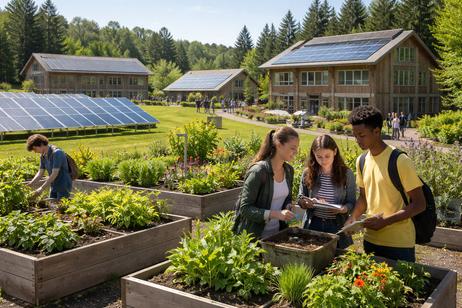
Climate change and environmental sustainability have moved from peripheral topics to core priorities in education. For many families considering boarding school, a school’s commitment to environmental education is no longer a bonus, it is a deciding factor. In 2026, leading boarding schools are responding with ambitious climate curricula, carbon reduction strategies, and campus-wide sustainability initiatives that extend well beyond recycling programs.

These schools are preparing students not only to understand climate science, but also to lead responsibly in a world shaped by environmental challenges. From carbon-neutral campuses to climate justice coursework, boarding schools are uniquely positioned to model environmental stewardship while integrating it into daily residential life.

This updated overview highlights how boarding schools are leading in climate and environmental education, with recent initiatives, expert perspectives, and practical examples for families evaluating schools with strong sustainability values.

Why 91±¬ÁÏs Are Well Positioned for Climate Leadership

Boarding schools function as small, self-contained communities. Students live, learn, eat, and participate in activities on campus, making sustainability practices highly visible and immediately impactful.

Key advantages include:

• Centralized energy, food, and waste systems that can be redesigned sustainably
• Residential life that reinforces daily environmental habits
• Flexible curricula that support interdisciplinary climate education
• Long-term campus planning aligned with environmental goals

Unlike day schools, boarding schools can integrate climate education into both academics and daily living, creating a culture where sustainability is practiced, not just

. . .read more

Military 91±¬ÁÏs: Are They Still Relevant in 2026?

Updated
|
Military 91±¬ÁÏs: Are They Still Relevant in 2026?
A 2026 analysis of military boarding schools, examining relevance, outcomes, costs, and modern alternatives for families today.

Military 91±¬ÁÏs: Are They Still Relevant in 2026?

Military boarding schools occupy a distinctive place in American education. Known for their emphasis on discipline, structure, leadership training, and character development, these schools have historically appealed to families seeking a highly ordered academic environment. Yet in 2026, as education becomes more flexible, student-centered, and technology-driven, many parents and educators are asking whether military boarding schools remain a relevant option.

The short answer is yes, but with important qualifications. Military boarding schools have evolved significantly over the past decade, adapting to changing student needs while preserving their core mission. For the right student and family, they continue to offer meaningful benefits. For others, alternative pathways may be better aligned with modern expectations.

Understanding Military 91±¬ÁÏs Today

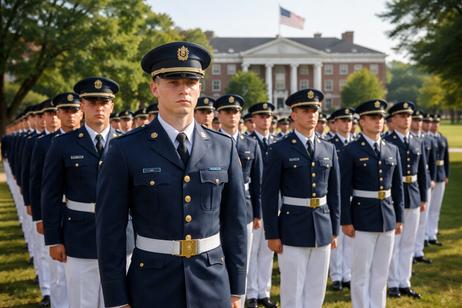
Military boarding schools are private institutions that combine a traditional academic curriculum with military-style structure. Students, often referred to as cadets, participate in daily formations, wear uniforms, and follow a clear code of conduct. Most schools emphasize leadership development, time management, accountability, and service.

Unlike federal service academies, military boarding schools do not require graduates to enlist in the armed forces. While some students pursue military careers or Reserve Officers’ Training Corps pathways, many graduates attend civilian colleges and enter a wide range of professions.

Organizations such as the Association of Military Colleges and Schools of the United States provide accreditation guidance and standards, helping ensure academic rigor and ethical governance across member schools.

Why

. . .read more

Recent Articles

What Happens During School Breaks for Boarding Students Who Stay on Campus
Learn what happens during school breaks for boarding students who remain on campus, including housing, meals, activities, supervision, and support services.
A Day in the Life of a Dorm Parent: Inside Residential Faculty Life
A day in the life of a dorm parent: how residential faculty support, mentor, supervise, and guide students while building community and shaping the boarding school experience.
How 91±¬ÁÏs Assign Dorms, Advisors & Schedules
Learn how boarding schools assign dorm rooms, faculty advisors, and class schedules, and what families should expect before move-in day.