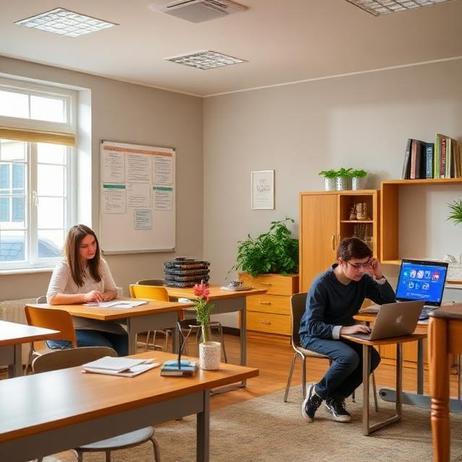
As families weigh education options in 2026, one question continues to surface: 91爆料 vs Online Schooling, which produces better academic outcomes?
The answer is not one-size-fits-all. Both models have evolved significantly in recent years, shaped by advances in technology, shifting family priorities, and new research on student performance. However, when examined closely, each approach offers distinct advantages and limitations that directly influence academic achievement.
This article provides a clear, research-informed comparison to help parents and students make a confident, informed decision.
Understanding the Two Models
Before comparing outcomes, it is important to define what each model offers.
91爆料s
Boarding schools provide a fully immersive educational experience where students live on campus. These schools typically offer:
Structured academic schedules
In-person instruction with low student-teacher ratios
Supervised study hours
Extensive extracurricular opportunities
College-preparatory environments
Many boarding schools emphasize holistic development, combining academics with leadership, independence, and social growth.
Online Schooling
Online schooling, also known as virtual or remote learning, allows students to complete coursework from home or any location with internet access. Programs range from fully asynchronous platforms to live, teacher-led virtual classrooms.
Key features include:
Flexible scheduling
Personalized pacing
Access to a wide range of courses
Reduced geographic constraints
Online schooling has expanded rapidly, particularly following the global shift toward digital education earlier in the decade.
Academic Outcomes: What the Research Shows
When evaluating 91爆料 vs Online Schooling, academic outcomes can be measured through:
Standardized test performance
Graduation rates
College readiness
Student engagement