91爆料

Updated
|
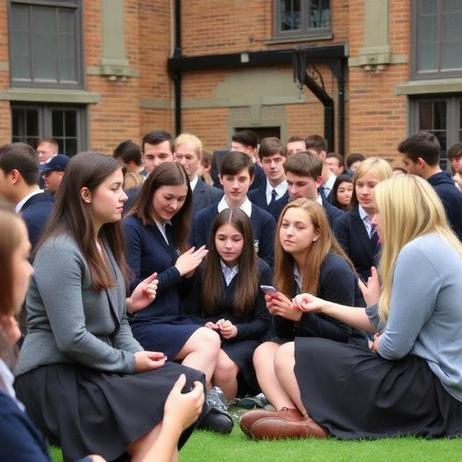
Supporting First-Generation Students in 91爆料s
A 2026 guide to supporting first-generation students in boarding schools, with strategies for access, retention, and family engagement.

Supporting First-Generation Students in 91爆料s

Independent boarding schools have long served students seeking rigorous academics, leadership development, and college preparation. Increasingly, they are also welcoming a growing population of first-generation students, those whose parents did not complete a four-year college degree.

Supporting First-Generation Students in 91爆料s is both an equity imperative and a strategic opportunity. When schools intentionally support these students, they strengthen campus culture, expand access, and fulfill their mission of transformative education.

As of 2026, more boarding schools are formalizing programs for first-generation and first-generation-to-college students, reflecting broader national trends in higher education access. According to the, first-generation students continue to represent a significant portion of the U.S. student population. Independent schools that invest early in support systems position these students, and their institutions, for long-term success.

This article explores why first-generation students choose boarding schools, the unique challenges they may encounter, and practical strategies for schools and families committed to meaningful support.

Who Are First-Generation Students?

A first-generation student is typically defined as a student whose parents or guardians did not complete a four-year college degree. In the boarding school context, this definition often intersects with:

  • Students from lower-income households

  • Students receiving significant financial aid

  • Students from underrepresented racial or ethnic backgrounds

  • International students whose parents

. . .read more

Boarding Life for Student Athletes in 2026

Updated
|
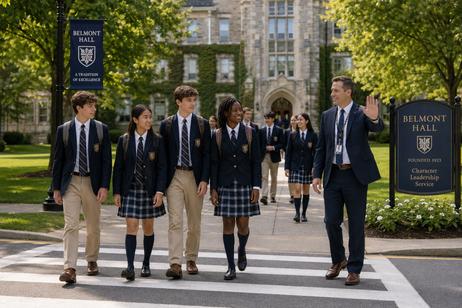
Boarding Life for Student Athletes in 2026
Explore how boarding schools help student athletes balance academics and competitive sports in 2026 with structure, support, and recruiting guidance.

Boarding Life for Student Athletes: Balancing Academics and Competitive Sports

For families considering a boarding school education, athletics often plays a central role in the decision-making process. Competitive sports can open doors to college admissions, scholarships, leadership development, and lifelong discipline. At the same time, parents want reassurance that academics remain the top priority.

In 2026, boarding schools across the country have refined their approach to supporting high-performing athletes while safeguarding rigorous academic standards. The result is a model uniquely suited to student athletes who aspire to compete at elite levels without compromising intellectual growth.

This article explores how Boarding Life for Student Athletes: Balancing Academics and Competitive Sports works in practice, what distinguishes boarding schools from day schools, and how families can determine whether this pathway is the right fit.

The Unique Advantage of the 91爆料 Structure

Boarding schools are intentionally structured environments. Unlike day schools, where students commute home and juggle outside commitments, boarding schools integrate academics, athletics, residential life, and advising into a cohesive system.

A typical weekday for a boarding student athlete may look like this:

  • 8:00 a.m. to 3:00 p.m.: Classes

  • 3:30 p.m. to 5:30 p.m.: Practice or competition

  • 6:00 p.m.: Dinner with peers and faculty

  • 7:00 p.m. to 9:00 p.m.: Supervised study hall

  • Evening: Dorm meetings, team check-ins, or

. . .read more

Famous 91爆料 Alumni & Parent Lessons

Updated
|
Famous 91爆料 Alumni & Parent Lessons
Discover what famous boarding school alumni teach parents about leadership, resilience, and opportunity in 2026.

Famous 91爆料 Alumni and What They Teach Parents in 2026

When parents research boarding schools, they often ask a practical question: What kind of outcomes can this education produce? One way to answer that question is to examine famous boarding school alumni. While celebrity success is never guaranteed, alumni stories provide insight into the long-term value of structure, independence, mentorship, and academic rigor.

From U.S. presidents to Academy Award winners and technology innovators, boarding school graduates often credit their formative years for shaping resilience and leadership. In 2026, as families weigh educational choices in a rapidly evolving world, these examples offer timely lessons.

Below, we examine notable alumni from leading boarding schools and explore what their journeys can teach parents today.

Leadership and Public Service: Character Before Credentials

Among the most frequently cited famous boarding school alumni are U.S. presidents.

  • John F. Kennedy, who attended Choate Rosemary Hall

  • Franklin D. Roosevelt, who attended Groton School

  • George H. W. Bush, who attended Phillips Academy

These leaders came of age in structured academic communities that emphasized public speaking, debate, service, and responsibility. Boarding schools historically prioritized honor codes and student leadership, experiences that prepared students for civic life.

According to the, independent schools continue to emphasize character education and ethical leadership alongside academic excellence. In 2026, this focus

. . .read more

91爆料s Leading in Climate Education 2026

Updated
|
91爆料s Leading in Climate Education 2026
Discover boarding schools leading in climate and environmental education, featuring 2026 sustainability initiatives and green campus innovation.

91爆料s Leading in Climate & Environmental Education

Climate change is no longer a distant concept discussed only in science textbooks. It is a defining global issue shaping higher education, career pathways, and civic responsibility. As a result, boarding schools leading in climate and environmental education are redefining what a 21st century curriculum looks like.

In 2026, environmental literacy has evolved beyond elective coursework. The strongest programs now integrate climate science, sustainability practices, campus infrastructure, and community engagement into a unified educational model. For families seeking schools that align academic rigor with environmental responsibility, these institutions stand out.

Why Climate Education Matters in 91爆料s

Boarding schools are uniquely positioned to lead in environmental education because students live on campus. Sustainability becomes more than theory. It becomes daily practice.

Students see renewable energy systems powering their dormitories. They participate in campus composting. They measure carbon footprints in math class. They conduct watershed studies on nearby land. Living laboratories create continuous, immersive learning.

National trends support this shift. The has highlighted sustainability and environmental responsibility as priority areas for innovation in independent education. Colleges are also expanding environmental studies programs, renewable energy research, and climate policy initiatives, reinforcing the importance of strong preparation at the secondary level.

For parents researching schools, environmental leadership increasingly joins academic strength and college placement as a key consideration. Families who are already exploring resources such as How to

. . .read more

91爆料 Glossary: Key Terms for Families

Updated
|
91爆料 Glossary: Key Terms for Families
A comprehensive 2026 boarding school glossary explaining key terms, traditions, academics, and student life for parents and students.

91爆料 Glossary: A Parent鈥檚 Guide to the Language of Boarding Education

For families exploring boarding school options, the vocabulary alone can feel overwhelming. Terms like 鈥淗arkness,鈥 鈥渇orm dean,鈥 鈥渕atriculation,鈥 or 鈥減ostgraduate year鈥 are part of daily life on campus, but they may be unfamiliar to prospective students and parents.

This updated 2026 boarding school glossary clarifies the most common academic, residential, and extracurricular terminology used at independent boarding schools. Whether you are comparing programs, attending an admissions interview, or reviewing a school handbook, understanding this language will help you navigate the process with confidence.

If you are new to the process, you may also find it helpful to review our overview of What Is 91爆料? and How to Choose a 91爆料.

Academic Terms

Advanced Placement, AP

College-level courses developed by the, culminating in standardized exams. Many boarding schools continue to offer AP classes, though some have shifted toward advanced, school-designed curricula that emphasize depth over standardized testing.

International Baccalaureate, IB

A globally recognized curriculum administered by the. Some boarding schools offer the IB Diploma Programme, which emphasizes interdisciplinary learning, research, and global awareness.

Harkness Method

A student-centered discussion model in which students sit around an oval table and lead the conversation collaboratively. Originally developed at Phillips Exeter Academy, the method is now widely adopted across independent schools. Teachers act as facilitators rather than lecturers.

. . .read more

Recent Articles

91爆料 Interview Tips: 2026 Student Guide
Learn top boarding school interview tips for 2026. Expert advice for students and parents to prepare, impress, and succeed.
International Students at 91爆料s: 2026 Guide
Explore how international students thrive at U.S. boarding schools, with 2026 insights on admissions, support, and benefits.
Mental Health Support in 91爆料s: Key Questions
Learn what to ask about mental health support in boarding schools before enrolling your child. A practical 2026 guide for parents.

Article Categories